
Blog
How to Care for Gold-Plated Jewelry So It Keeps Its Shine

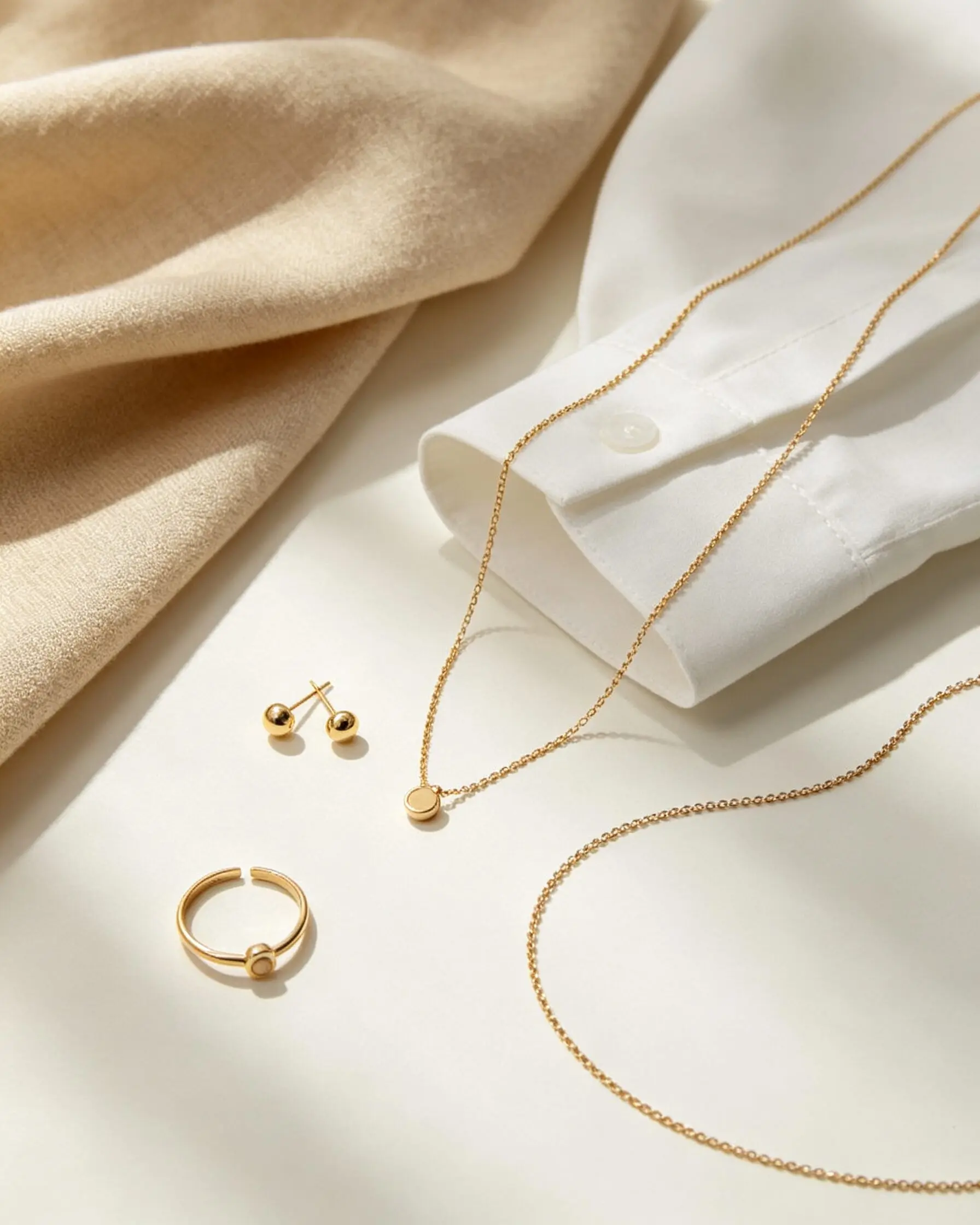
Gold-plated jewellery rarely fails because of water. It fails because of friction. The layer of gold on a plated piece is measured in microns — one micron is a thousandth of a millimetre — and every rub against skin, fabric or another chain removes a few atoms of it. Understanding that one fact changes how you wear, clean and store the piece.
This is the routine we recommend for 18k and 14k gold-plated sterling silver, in the order that matters.
What actually wears the plating off
- Friction — the single biggest cause. Rings and bracelets wear at the edges first because they touch everything. Pendants and earrings last far longer.
- Sweat — acidic skin and salt accelerate the micro-corrosion that lifts plating at the edges.
- Perfume and hairspray — alcohol is a solvent. Sprayed directly on a plated surface, it dulls the finish quickly.
- Chlorine — pools and hot tubs are the fastest way to turn plated gold patchy.
- Sunscreen and lotion — they trap grit against the surface, which then acts like sandpaper.
- Storage abrasion — several pieces loose in one box polish each other down over months.
The five habits that do the most damage
- Spraying perfume on the neck and then putting the chain on.
- Sleeping in a chain or ring.
- Showering or swimming without taking it off.
- Dropping everything into one jewellery dish at night.
- Wiping with tissue or a rough towel, which leaves lint and micro-scratches.
Fix those five and you have solved most of the problem. Everything below is refinement.
The thirty-second daily routine
Morning: shower, moisturise, apply perfume, wait two minutes, then put jewellery on last. That single ordering change keeps alcohol and lotion off the plating.
Evening: take jewellery off first, before changing clothes or washing your face. Wipe each piece with a dry microfiber cloth — not a tissue — to remove skin oils and sweat before they set.
Storage: one small pouch or compartment per piece. A plated chain stored against a silver chain will be abraded on both sides.
How to clean plated gold without ruining it
Lukewarm water, one drop of mild dish soap, thirty seconds with a soft brush (a baby toothbrush is ideal), rinse, then dry completely with microfiber before storing. That is the whole method.
What not to use:
- No ultrasonic cleaners. They lift plating at edges and seams.
- No silver polishing cloths on gold plate. The impregnated polish is abrasive and will take the gold layer with the tarnish.
- No bleach, vinegar, baking soda or toothpaste. All of them attack either the plating or the alloy beneath.
- No jewellery dips. They are formulated for bare sterling silver, not for a gold layer over it.
Tarnish or wear? How to tell the difference
If the surface has gone grey or brown in patches but the colour underneath is still gold, that is tarnish on the silver base showing through thin plating — clean it gently and it may improve.
If the edges have gone pink or copper-coloured, the plating has worn through to the base metal. No cleaning will fix that. The options are replating (usually $25 to $60 plus shipping), replacing the piece, or accepting it as a different look.
Rings and bracelet edges are always the first to go. Pendants, studs and chains that sit still can hold their finish for years.
Storage that actually works
Dry, dark and individual. A closed pouch with an anti-tarnish strip slows oxidation; a bathroom shelf speeds it up, because steam and temperature swings are constant. If you have space for a lined jewellery box with separate compartments, that is better than a bowl by the sink, and both are better than a plastic bag in a humid room.
The base metal matters as much as the gold
Two plated pieces with identical gold layers can age very differently depending on what is underneath. Brass and copper are cheap and take plating well, but once the gold wears through, the exposed metal oxidises and can leave a green mark on skin. Steel is harder and holds a polish, but it is heavy and feels cold. Sterling silver costs more and is softer, but it is the only base that still looks like jewellery after the plating has thinned — which is why gold vermeil uses it.
If the listing does not name the base metal, ask. A brand that cannot answer is using the cheapest option available.
How to tell whether a piece is solid or plated
Weight is the first clue: solid gold is dense and feels heavier than its size suggests. Stamps are the second: 750, 585, 417, 18K, 14K or 10K, usually on the clasp or inner band. Wear pattern is the third: plating shows a different colour at the edges, solid gold does not. Price is the fourth — if a chain is $30 and described as solid 18k, it is not.
If you are buying plated intentionally, buy it for what it is: a well-made piece with a sterling silver base and a finish that will last one to three years of regular wear. That is a fair trade at $20 to $40. It is not a fair trade at $120.
Three pieces where the plating sits on low-friction areas and therefore lasts longer than average: the 18k gold cloud pearl pendant, the 14k gold-tone peace lock necklace, and the gold flower stud earrings, which weigh almost nothing and barely move.
Related Reading
- How to Care for 925 Sterling Silver Jewelry
- Minimalist Gold Jewellery: Build an Everyday Set That Works
- Solid Gold or Gold-Plated? How to Choose a Gold Gift That Lasts
- Hypoallergenic Earrings: Which Metals Suit Sensitive Ears
See the full 925 sterling silver and gold-plated collection.
2 thoughts on “How to Care for Gold-Plated Jewelry So It Keeps Its Shine”