

Blog
Hypoallergenic Earrings: Which Metals Suit Sensitive Ears

Most earrings that hurt are not reacting to permanently sensitive skin. They hurt because of one metal in one place: an alloy buried under thin plating, a post that is not the same material as the front, a clasp resting against the lobe for eight hours. Change the metal and the problem usually goes away.
The difficulty is that little on a product page tells you which metal is actually touching your skin. “Hypoallergenic” appears on packaging everywhere and means whatever the seller decides. The labels that carry real information are the ones with numbers in them.
“Hypoallergenic” Is Not a Regulated Term
No standard sets a threshold of allergen a piece may contain before it loses the right to call itself hypoallergenic. A pair can be labelled that way and still carry nickel in the base alloy, because at the point of sale the plating covers it. The word signals intent, not a test result.
Composition labels work differently. 925 and 999 state how much silver is in the piece. That number is what your skin responds to, and it is the only claim worth building a decision on.
What Actually Causes the Itch
Nickel is the most common cause of contact allergy to jewelry, and also the most common metal in inexpensive base alloys, because it is hard, bright and abundant. The reaction is rarely instant: it builds through repeated exposure, which is why a pair you wore comfortably last spring can leave your lobes red this autumn.
- Base alloy under plating. Plating is thin. It wears through first where the post meets the lobe, and once it does, the alloy underneath is in direct contact with skin.
- Mixed construction. A silver-coloured front on a steel or brass post is common. The part in the photograph and the part through your ear are not always the same metal.
- Moisture and movement. Sweat, shampoo and perfume sit between metal and skin, and a swinging earring abrades the surface. Both make it easier for metal ions to reach the skin.
999 and 925: What the Numbers Tell You
Two labels cover almost all silver jewelry; the difference matters more for ears than pendants.
999 fine silver is 99.9% silver. That leaves very little room for the trace metals that trigger reactions, making it the closest thing to pure silver most people will wear. It is also soft, bending and denting more easily than an alloy, so it suits small, low-stress shapes — a round bead on a straight post rather than a long drop that swings against the jaw all day.
925 sterling silver is 92.5% silver and 7.5% other metals, usually copper. That 7.5% is what gives the metal the stiffness a post, hinge or fine chain needs. Sterling is the sensible choice for anything with moving parts or real length.
Neither number promises a nickel-free piece: the alloy recipe belongs to the maker, not the standard. What the number confirms is that the base is a precious metal, not brass with a wash of colour over it.
The Post Deserves More Attention Than the Front
The front is what you choose; the post is what your body has to tolerate. It passes through a piercing and sits in a warm, slightly damp environment for hours. If one part of a pair causes trouble, it is almost always this one.
So look for the post material stated separately, not folded into a general “silver” claim. The conch shell pearl stud earrings list their ear post as 925 sterling silver alongside the shell, enamel and pearl front — a small line, and the one that decides whether the pair lasts a full day.
Gold Tone Is a Finish, Not a Metal
“Gold tone” and “gold plated” describe colour, not content. A gold-toned piece is usually silver, brass or steel with a microscopic layer of gold over it. The layer is measured in microns and it does wear, first at the edges and where it meets the skin.
Plating over silver behaves differently from plating over brass. When gold wears off a silver base, what shows is still silver; when it wears off brass, what shows is an alloy that often contains nickel. If a gold finish matters, the base metal matters more.
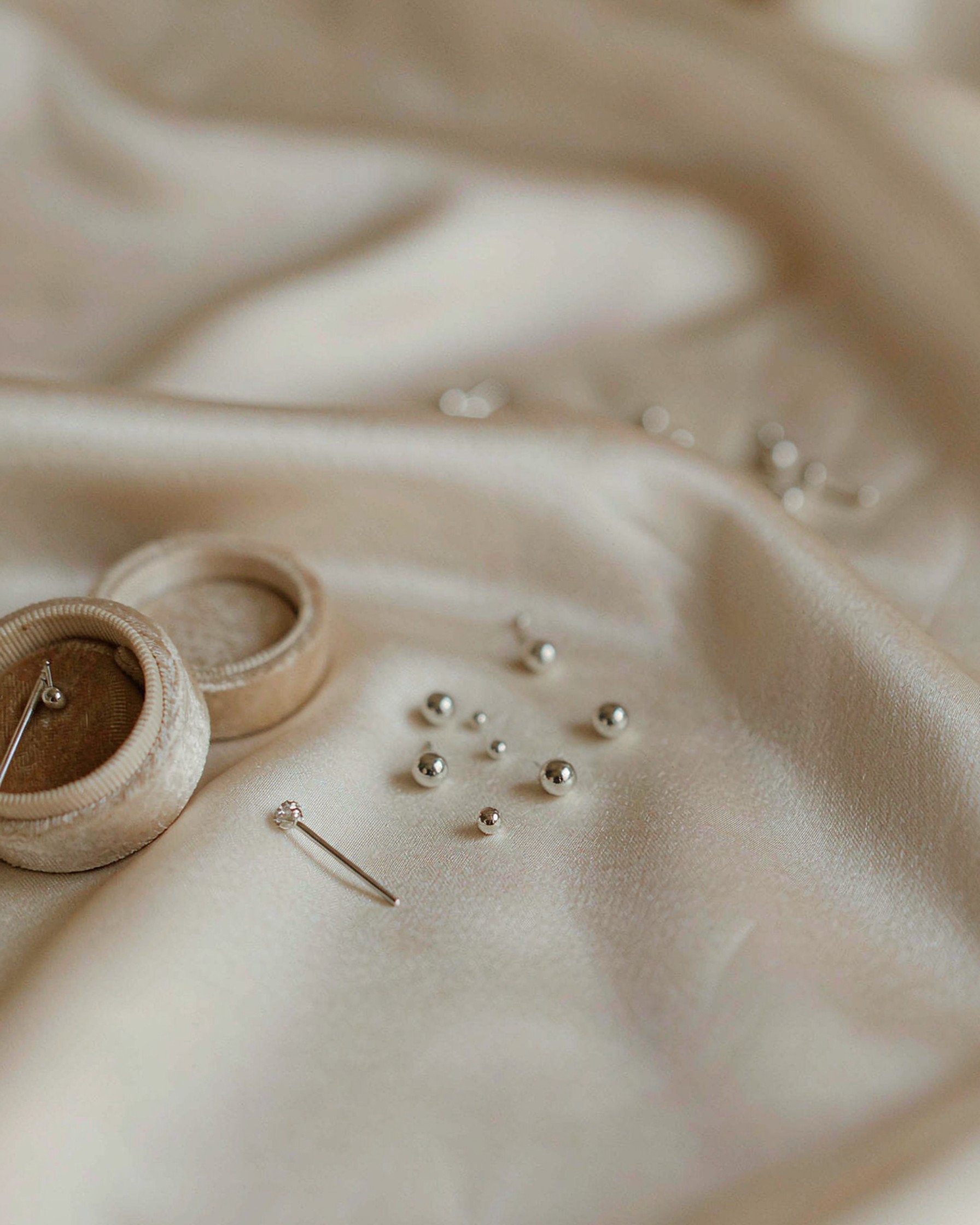
The 999 fine silver ball studs show how to read this properly. They come in 3 mm, 4 mm and 5 mm beads with a plain silver finish, a white gold tone or a rose gold tone, and the metal underneath stays fine silver in every version. You are choosing a colour, not a different base.
Enamel and Stone Change the Contact Area
Where a design is built from enamel or a set stone, less metal touches the skin. The lotus flower stud earrings layer enamel petals around a slim centre on a 925 silver base, keeping the coloured surface forward and leaving the post as the main contact point. That suits people who react to a large flat metal surface but tolerate a small post.
A Checklist for the Product Page
- Post material, stated separately. If it is not listed, assume it matches the least expensive part.
- A number, not an adjective. 925 and 999 are claims you can check. “Hypoallergenic” is not.
- Plating thickness, if given. More microns means a longer life before the base shows through.
- Drop length and movement. A long dangle keeps metal moving against the jaw. The aventurine butterfly drop earrings are built as a tassel on a 925 silver base, so the butterfly sits high and the swing happens below it, away from the piercing.
Care That Prevents Most Reactions
Even a good metal fails if it is worn badly.
- Take them off before swimming, showering and sleeping. Chlorine and soap residue both attack plating.
- Apply perfume and hairspray first, then put jewelry on. Alcohol and solvents are the fastest way to dull a finish.
- Wipe the post with a dry soft cloth after each wear; much irritation is just a film of product and skin oil held against metal.
- Store pairs separately in a dry pouch. Silver tarnishes faster in humid air, and a tarnished post is rougher.
- Rotate your pairs. Wearing the same earrings every day wears the same contact point every day.
If One Pair Still Reacts
Reactions are not always about the metal. A new or healing piercing, or a backing screwed on too tight, will react to a material that was fine before. Loosen the backing, clean the post, and give the lobe a few days without earrings before blaming the pair. If a rash spreads beyond the contact area or lasts more than two weeks after you stop wearing them, ask a dermatologist rather than a shop.
The Short Answer
For most sensitive ears the order is simple: fine silver, then sterling silver, then gold plated over silver, then anything whose base metal is unstated. Buy the smallest pair that does the job, check the post before the design, and retire a plated pair once the finish goes rather than waiting for the itch.
Related Reading
- How to Care for 925 Sterling Silver Jewelry
- How to Care for Gold-Plated Jewelry So It Keeps Its Shine
- Moissanite vs Diamond: A Real Buyer’s Guide
- Chalcedony, Jade and Aventurine: A Stone Guide
Browse the full collection of sterling silver earrings for sensitive ears. Nickel-free posts, lightweight enough to forget you are wearing them.
One thought on “Hypoallergenic Earrings: Which Metals Suit Sensitive Ears”