
Blog
Jasmine Flower in Jewelry: Meaning and Gift Occasions

Jasmine is picked at dusk. The flowers open after sunset and release most of their scent in the dark, which is why night markets in India and Southeast Asia sell garlands late into the evening and why the plant carries a reputation for romance that has nothing to do with its appearance. A small white flower that gives its fragrance away at night is an easy metaphor, and jewelry has been borrowing it for centuries.
What Jasmine Means in Different Cultures
The flower grows across South and Southeast Asia, and each culture reads it slightly differently.
India. Mogra, as jasmine is known in Hindi, is strung into hair garlands and used in temple offerings. It is associated with devotion and with the goddess Lakshmi, and at weddings it appears in the bride’s hair and in the garlands exchanged by the couple.
The Philippines. Sampaguita is the national flower. Garlands are sold on the street and draped over visitors as a welcome, which makes the flower a symbol of hospitality as much as love.
Thailand. Phuang malai — jasmine buds strung with marigold — are given as blessings and hung in cars and homes. The bud, not the open flower, is the form used most often.
China. Jasmine is the subject of Mo Li Hua, one of the most recognizable folk songs in the country, and the base of the tea that carries its name. The association is with purity, sweetness and the ordinary beauty of a courtyard plant.
Indonesia. Jasmine is woven into wedding ceremonies, where it stands for sincere and lasting affection.
The common thread is that jasmine is never the flower of grand passion. It is the flower of devotion, welcome and everyday sweetness, which makes it a better gift for a friend or a mother than for a new partner.
Why Jasmine Jewelry Is Usually Silver
The flower is white, and silver is the metal that reads white without pretending to be something else. Enamel can imitate the colour more literally, but flat enamel loses the thing that makes jasmine recognizable: the way the petals curl and overlap.
Most jasmine pieces therefore sculpt the flower in metal and leave it uncolored, letting the polish and the small facets do the work of the petals. Some versions add cubic zirconia at the centre to suggest the shadow inside the bloom; others keep it plain so the piece reads as a botanical study rather than a sparkly flower.
Jasmine, Gardenia and Orange Blossom
Three white flowers, three different meanings, and shops use the names loosely. The difference matters if the gift is meant to say something specific.
| Flower | Scent and habit | Traditional meaning | Best given for |
|---|---|---|---|
| Jasmine | Opens at night, sweet and heavy | Devotion, hospitality, purity | Friendship, family, a quiet thank-you |
| Gardenia | Day-blooming, creamy and rich | Secret love, refinement | Romance, an anniversary |
| Orange blossom | Citrus and light | Marriage, fertility, good fortune | Bridal gifts, weddings |
In jewelry terms, jasmine is the most wearable of the three. The flower is small, the petals are simple and the shape works at eight millimetres, which is why it appears on bracelets and studs as often as on pendants.
How a Jasmine Flower Is Built in Silver
There are three common constructions, and they age differently.
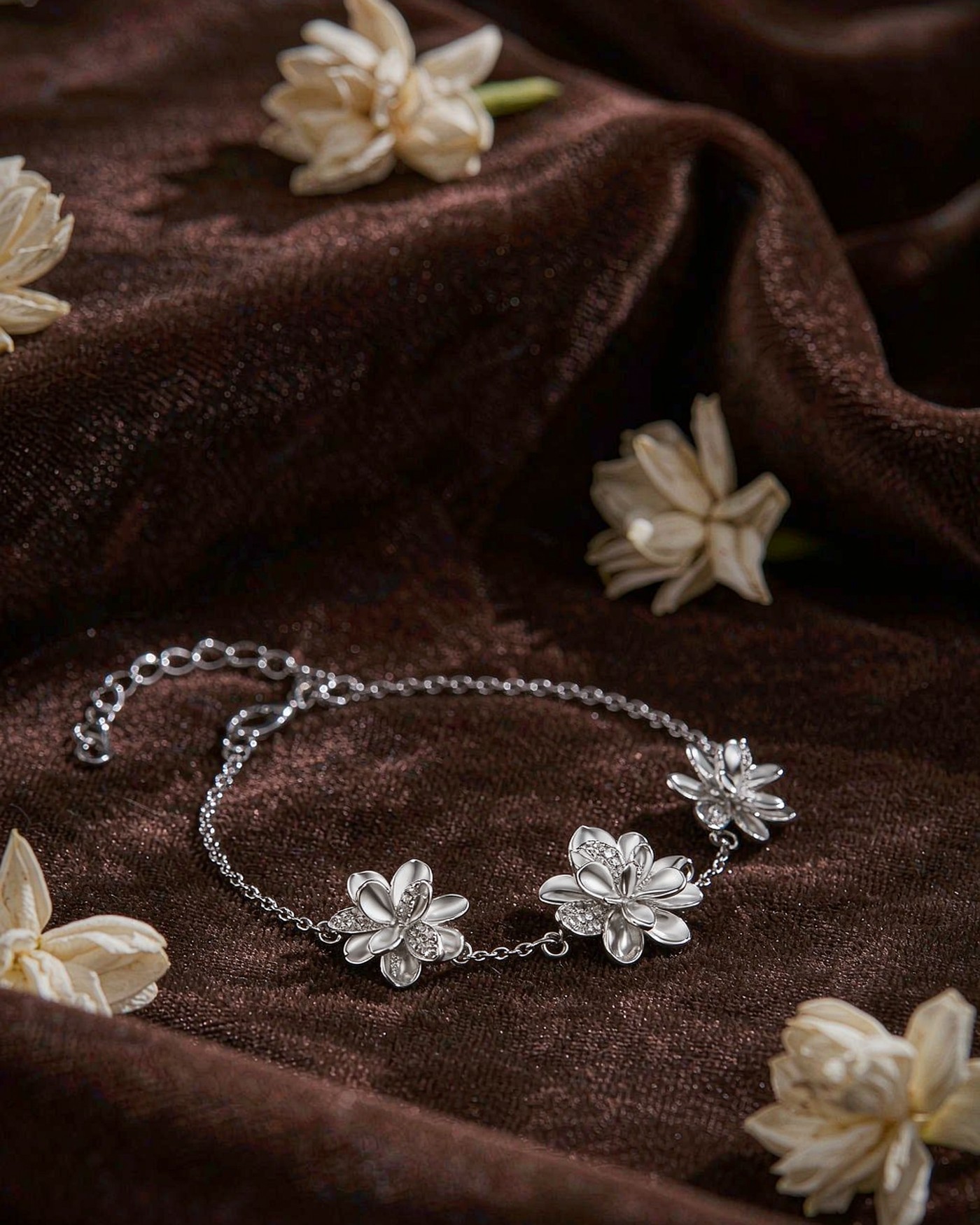
Sculpted from sheet and wire. The petals are cut, shaped and soldered individually, then polished. This gives the most depth and the most convincing silhouette, and it is the method behind the jasmine flower bracelet, where three blooms sit along a fine chain with small stones set into the petals.
Cast from a single mold. Faster and less expensive, with softer edges and less definition between petals. At arm’s length it looks the same; in the hand it reads as a flower-shaped lump.
Stamped or die-cut. A flat outline with engraved lines. The most affordable, and the version that flattens first when it is knocked against a desk.
Whichever method is used, check the back. A well-made floral piece is finished on both sides, because the underside is what sits against the wrist and what you see when you turn your arm.
Three Ways to Wear the Collection
The jasmine design exists as a bracelet, a necklace and a pair of stud earrings, and the three are more useful apart than together.
The bracelet alone. The easiest entry point. It sits beside a watch without competing, and the flowers are small enough to wear with short sleeves at work.
Bracelet plus studs. A coordinated set that reads as deliberate without being matching. Keep the neck bare, or add a chain with no pendant.
The necklace on its own. Better for a high neckline or a plain dress. Wearing all three at once works for a wedding or a holiday, but it leaves no room for anything else.
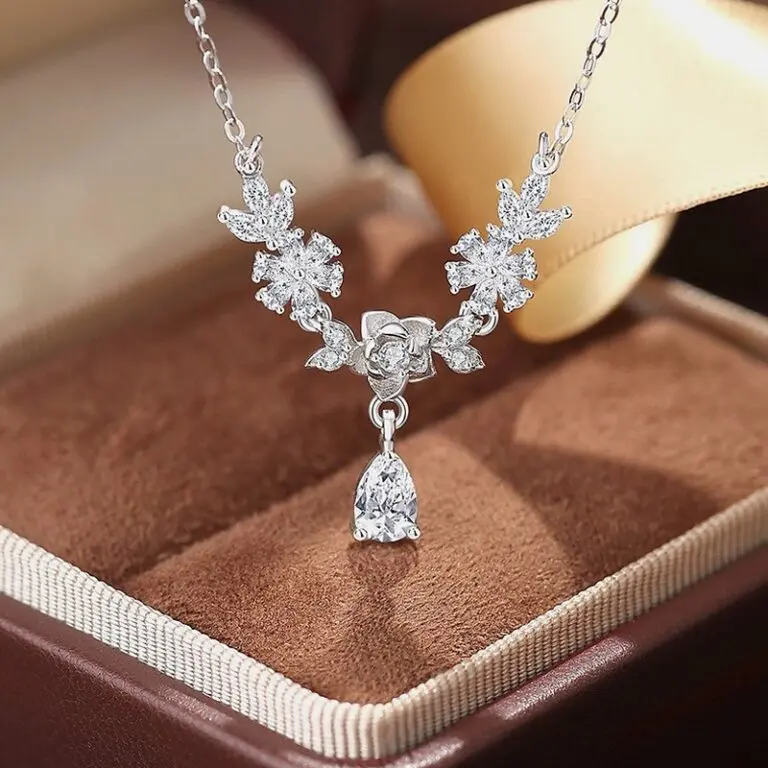
Because the flower is botanical, it also layers well with a gardenia flower necklace: two white flowers in the same metal read as a garden rather than a set. The lotus stud earrings do the same job for the ears, with enamel adding a little colour.
Bracelet Fit and the Extender Chain
Most women’s bracelets are 16 to 18 cm, with a 3 cm extender. That range covers wrists from about 14 to 18 cm, which is why the extender matters more than the nominal length.
To measure, wrap a strip of paper around the wrist bone, mark where it meets, and measure the paper flat. Add 1 cm for a comfortable fit and 2 cm if you want the bracelet to slide. A bracelet that sits exactly at the wrist measurement will leave a mark by the end of the day.
On a chain bracelet, the clasp is the weak point. A lobster claw holds; a spring ring bends open after a few hundred uses. Check that the extender links are soldered closed rather than cut, since an open link will work its way off a moving wrist.
Gift Occasions That Actually Fit
Jasmine is not a seasonal flower, but the jewelry has a natural calendar.
- Christmas. The bracelet is small, inexpensive enough to be an add-on gift, and does not require a size beyond the extender range.
- Birthdays in spring and summer. The flower is at its most convincing when the recipient is not surrounded by winter.
- Bridesmaids. A small floral piece in silver photographs well and does not clash with a dress colour.
- Mother’s Day. The devotion symbolism fits better than a rose, which carries romantic weight.
- A travel keepsake. A flower from a trip is a common souvenir; a jasmine bracelet does the same job without looking like airport merchandise.
If the gift is for a wedding, check the dress code first. Silver reads cool, so it suits cool-toned fabrics and looks out of place against warm gold beading.
Care for Sculpted Florals
Small petals are thin, and thin silver bends before it breaks.
- Take the bracelet off before lifting weights, moving furniture or carrying a heavy bag on that wrist.
- Avoid ultrasonic cleaners on pieces with set stones or plated finishes; the vibration can loosen a setting.
- Clean with a soft brush and lukewarm water with a drop of washing-up liquid, then dry completely with a cloth.
- Store flat or on a soft roll. A flower that is pressed under other jewelry will lose its shape.
- Keep it away from perfume and hairspray, which leave a film in the gaps between petals.
The Short Answer
Jasmine in jewelry means devotion, hospitality and quiet affection. In silver it is usually sculpted rather than enamelled, which is why the best pieces show individual petals rather than a flat outline. Choose the bracelet if you want something wearable every day, the studs if you want the motif beside the face, and give it for a birthday, a thank-you or a bridesmaid’s gift rather than for romance.
Related Reading
- Snowflake Necklace Meaning: Why It Became a Gift Staple
- Chinese Coin Necklace: Meaning, History and How to Wear It
- Solid Gold or Gold-Plated? How to Choose a Gold Gift That Lasts
- How to Care for 925 Sterling Silver Jewelry
Browse the full collection of floral sterling silver bracelets. Sculpted flowers in 925 silver, small enough for everyday.